
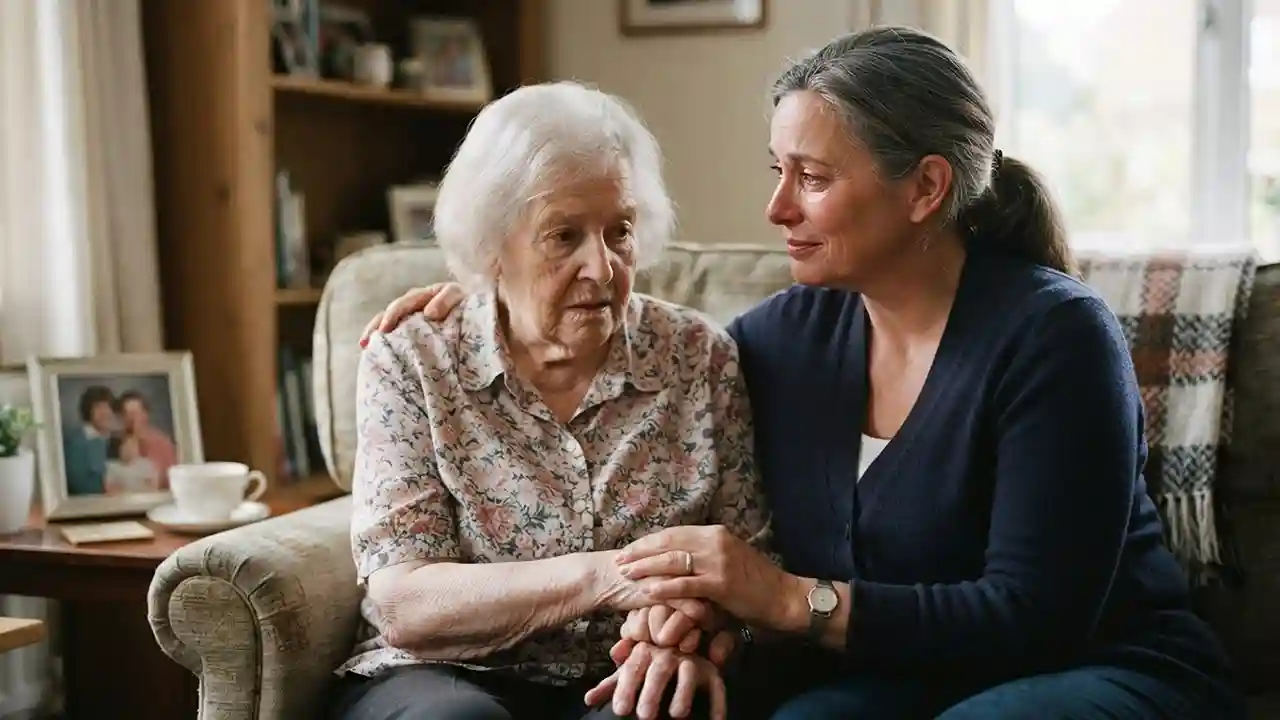
 There is a particular kind of pain in watching your parent look at you and not know who you are.
You may know everything about them. You may know how they would call your name, what kind of food they liked, the many stories that they would tell you, and what they would worry about. However, now, you may need to introduce yourself to them all over again. They may sometimes confuse you with other people or sometimes, they will just not recognise you at all.
Nevertheless, you remain right there to take care of them.
At Emotional Ability Resources (EaR), we have often observed how confusing this whole process is for carers. Even if you are deeply in love with your parent, you may be exhausted, angry, feeling lonely, or even resentful.
The grief that arrives before the loss

Anticipatory grief dementia is the grief that can begin when you start losing parts of a relationship while the person you love is still alive.
With dementia, the changes may happen slowly. First, your parent forgets small things. Then familiar conversations become difficult. They may forget important events, repeat the same questions or struggle to recognise people they have known for years.
For a son or daughter, this can feel like losing someone in pieces.
You are still having tea with your mother, but she may not remember that you are her daughter. You are still visiting your father, but the conversations you once had may no longer be possible.
This creates a strange kind of grief. You do not want to mourn someone who is sitting right in front of you. At the same time, you are mourning the relationship as it used to be.
That is why caring for a parent with dementia can be emotionally exhausting in ways that are not always visible to other people.
Why carers often cannot call it grief

There has been no funeral. Nobody has died. So you may feel that you have no right to say, “I am grieving.”
In many Indian families, caring for parents is also closely tied to duty. You may have been taught that your parents cared for you when you were young, and now it is your responsibility to care for them.
That sense of responsibility can be meaningful. But it can also make it harder to admit that you are struggling.
You might think, “How can I complain when this is my mother?”
Or, “My father cannot control his dementia. Why am I getting angry?”
This is where caregiver guilt can become overwhelming.
You may feel guilty for needing time away. Guilt for getting impatient. Guilt because a small part of you wishes it could go back to how it was before caregiving was a big part of your life.
But at EaR, we believe that knowing you have these emotions doesn’t mean you act on them. You can have challenging emotions but not let them lead to neglect or abusive behaviour.
The emotions no one tells you about
Caregiving isn’t always patience and compassion.
Sometimes it’s taking five minutes in the bathroom so you have some quiet time.
Sometimes it’s getting annoyed by your parent asking the same question for the tenth time.
Sometimes it’s just being grateful that your sibling is taking care of them today. And sometimes, it is resentment.
Is it normal to feel resentment as a carer? It can be. Resentment may develop when you are constantly tired, feel that other family members are not helping enough, or feel that your own life has been put on hold.
You may also feel angry at your siblings, embarrassed by your parent’s behaviour outside the home, or frustrated by how little control you have over the situation.
These feelings do not automatically mean you love your parent less.
Ignoring them, however, can contribute to caregiver burnout. When exhaustion continues for too long, even small problems can start feeling unbearable.
What happens to your own mental health? 
One of the biggest struggles carers face is slowly disappearing from their own lives.
You may stop meeting friends because it is difficult to leave your parent alone. You may postpone a doctor’s appointment because there is nobody else available. Your sleep may become disturbed. Meals may become irregular. Even simple things you once enjoyed can begin to feel like unnecessary luxuries.
Over time, you may stop thinking of yourself as a son or daughter and start thinking only as a carer.
This is an important part of caregiver mental health dementia conversations. Long-term caregiving can create ongoing emotional stress. It is not something you simply “get used to” because you have been doing it for a long time.
At EaR, counselling can give carers a place to talk about the parts of caregiving they may not feel comfortable discussing with family. That might include anger, grief, guilt, relationship changes, family conflict or simply the exhaustion of having to keep going.
You do not have to reach breaking point before asking for support.
EaR offers confidential, online emotional support designed around the realities of caregiving.Explore Caregiver Support →
Staying connected when memory goes
When memory changes, the natural response is often to keep testing it.
“Do you know who I am?”
“Do you remember where we went?”
“Don’t you remember this?”
But repeatedly asking your parent to remember something they can no longer access may leave both of you frustrated.
Instead, try to meet them where they are.
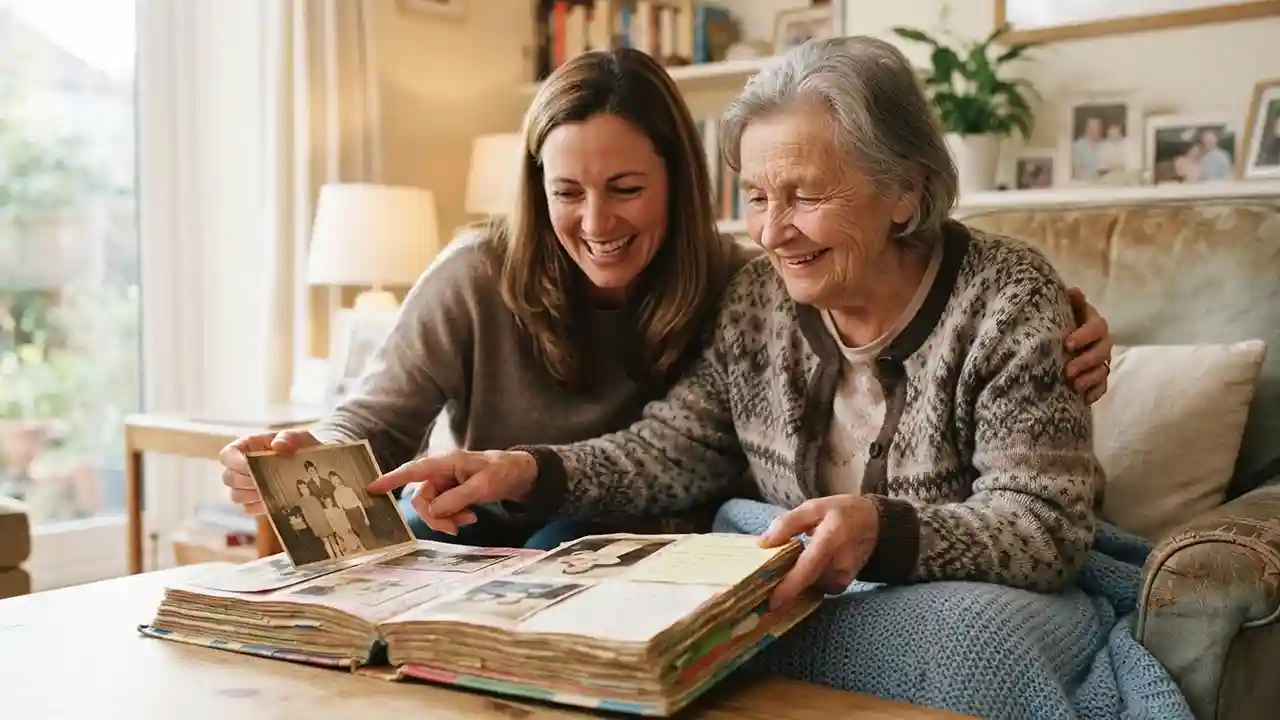
Music can sometimes create a sense of familiarity even when words are difficult. A favourite meal, a familiar smell, photographs, gentle touch or a regular routine can help create moments of connection.
If your parent does not recognise you, you do not always have to force the recognition.
You can simply sit beside them.
You can talk about what you are doing now. You can listen to the same song together. You can hold their hand.
Learning how to talk to a parent with dementia is often less about finding the perfect words and more about reducing pressure and creating safety.
The relationship may no longer exist in the way it once did. That is painful to accept. But connection can still exist in the present.
These techniques are also in keeping with advice provided by the National Institute on Aging, which suggests talking to the individual in a soothing manner, offering reassurance, sticking to routines and familiar environments, and not asking questions like “Don’t you remember?” when the individual can’t remember things.
What support actually looks like

Good caregiver support is not only about helping with practical tasks. Sometimes, what a carer needs most is somewhere to put the emotional weight they have been carrying.
Start by telling someone honestly that you are struggling. Ask family members for specific help instead of simply saying, “I need support.” One person might handle appointments while another takes over for a few hours each week.
Do not wait until you are completely exhausted before arranging respite or asking someone else to step in.
Support groups can also help you realise that you are not the only person having complicated feelings. However, every carer needs something different. Some people benefit from shared experiences, while others need private counselling where they can speak freely.
For families looking for caregiver support India, EaR can provide a supportive space to explore the emotional side of caregiving. Our focus is not on telling you what you should feel. It is on helping you understand what you are feeling, cope with the changes and find healthier ways to carry the responsibility.
You are allowed to need care too.
If caring for a parent with dementia is leaving you exhausted, guilty or quietly grieving, talk to an EaR counsellor. A one-to-one online session gives you a private space to say the things you may not be able to say at home.
Read next:Stress vs Burnout: How to Recognise the Difference · Why Your Body Knows You Are Stressed Before You Do