
 Physical symptoms of stress are often present before you acknowledge that there’s an issue. Aching jaws by Wednesday. Never being able to sit down with relaxed shoulders. Stomachs that react to a calendar reminder.
You may describe your life as “fine” – you have deadlines, obligations, relationships and a long list of things to manage – but nothing seems serious enough to be “stress”.
Your body, however, may tell a different story.
At Emotional Ability Resources (EaR), we see these physical warnings as indicators. They are not necessarily an immediate sign that stress is the culprit, but they can be an opportunity to ask what your body has been carrying.
Knowing how stress affects the body can help you see earlier signals before they become impossible to ignore.
Physical Symptoms of Stress: Why Stress Is a Physical Event First
Stress is not just an emotion or a thought, but also a physical reaction.
When your brain senses pressure or possible danger, your body prepares itself to react. Your heart rate may increase, muscles can tense, breathing can change, and digestion can either slow or stop.
This is a fantastic response if you need to get somewhere quickly, but if the pressure continues for days or weeks without recovery, your body may struggle to return to its normal state.
That is why physical symptoms of stress can crop up even when you do not consciously feel stressed – your body has reacted before your mind has worked out what is happening.
Body Signs of Stress You May Have Been Ignoring for Years

Some body signs of stress are so common that you forget that you have them.
- Jaw and teeth: You clench your jaw during work or wake up sore
- Shoulders and upper back: Your muscles are always tense
- Shallow breath: You rarely take a relaxed, comfortable breath
- Gut symptoms: Your stomach reacts before meetings, deadlines, and difficult discussions
- Sleep disruption: You wake during the night with your mind suddenly alert
- Headaches: A recurring headache is something you work through
- Skin changes: Stress is sometimes associated with changes in skin for some people
- Holiday exhaustion: You become unwell or completely exhausted as soon as you finally stop working
Physical symptoms of stress are easy to dismiss as “manageable”, after all – you stretch your shoulders, have another coffee, take something for the headache and carry on. However, there comes a point when consistent signals should be taken seriously.
Recognised three or more of these signs?
EaR’s stress management support helps you connect physical signals to their triggers before they turn into burnout. Explore Stress Management →
Why Do Stress Physical Symptoms Happen Before You Notice Them?
You may wonder why stress causes physical symptoms when you feel like you are managing perfectly well.
Your body has a constant dialogue with your brain, sensing and sending messages about how your breathing, heart rate, muscles, digestion, temperature, and energy are feeling. This is known as interoception.
However, your ability to acknowledge and understand those signals may be impaired if you have spent years putting your emotions on hold.
Perhaps you were taught to put your feelings on hold to put your work first. Perhaps other people’s needs always come before your own. Perhaps admitting that you were overwhelmed was never an option.
You may have become exceptionally good at getting things done, and significantly worse at knowing what you need.
This is why physical symptoms of stress can sometimes be the first sign that something needs your attention.
How Stress Affects the Body and Your Heart Health
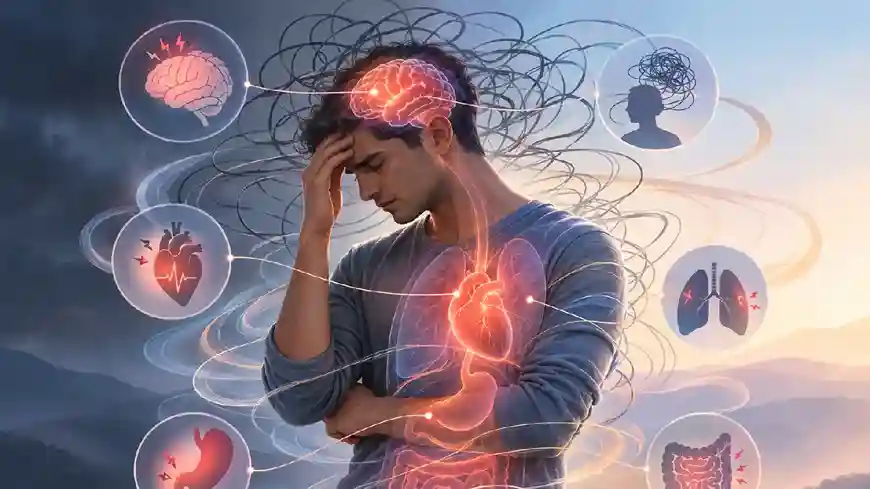
Understanding how stress affects the body also involves looking at how it affects your cardiovascular health.
Short bursts of stress are entirely normal – your body reacts and, ideally, settles back to a calmer state once the pressure has passed. Ongoing stress with little time for recovery, however, can begin to impact your heart rate and blood pressure, sleep, physical exercise, and other factors connected with heart health.
The American Heart Association notes that chronic stress can affect cardiovascular health through physiological responses and stress-related behaviours.
This doesn’t mean that every racing heart or headache is caused by stress – but it does highlight that recovery should be something that is prioritised.
How to Notice Physical Symptoms of Stress Early

Learning how to notice stress early can be surprisingly simple. Choose a time each day and spend two minutes checking in with your body – notice your jaw, shoulders, breathing, stomach, hands, and overall body energy. Then, keep a symptom and context log for a week:
| What I noticed | What happened before it? | What might I need? |
| Tight shoulders | Back-to-back meetings | A short break |
| Upset stomach | Difficult conversation | Time to process |
| Headache | Poor sleep | Rest |
| Jaw tension | Presentation preparation | Support |
Your early warning sign may be a tight jaw, restless sleep, irritability, stomach discomfort – or something else entirely – but the important thing is that you begin to learn the language of your body.
Stress Management Techniques That Help Your Body Recover

Some stress management techniques focus on helping your body recover from a constant state of tension.
Movement can be a good start – walking, stretching, exercising, or moving to a new environment can help to remind your body that it is safe again. Breathing can also help – slow, comfortable breathing with a slightly longer exhale can be calming to some people.
Social connections are a vital part of stress management too, because talking honestly with someone you trust can create a sense of safety that scrolling, working, or busying yourself cannot always offer.
While a holiday can give you distance from work, it does not necessarily address the issue. Likewise, numbing yourself with endless scrolling or constant busyness is not the same as recovery – your body needs actual opportunities to recover.
Why Do I Wake Up at 3am Stressed?
If you have looked up why I wake up at 3am stressed, look at the bigger picture.
Stress can impact your sleep patterns and cause worries to feel louder when there are fewer distractions around you. You may suddenly start thinking about tomorrow’s meeting, an unresolved conversation, or everything you did not get done that day.
Ask yourself what has been happening throughout the week – are you carrying unresolved pressure, getting enough sleep, or repeatedly waking – was it an occasional night?
If your sleep difficulties continue or begin to affect your daily life, speak to a healthcare professional.
When Physical Symptoms of Stress Should Be Checked
Not every symptom is stress.
Persistent, severe, unusual, or worsening symptoms should always be looked into medically. If you have unexplained pain or other concerning physical changes, do not assume that it is a physical symptom of stress.
Once physical causes have been ruled out, there is another question – what might my body be carrying that I have not acknowledged?
This is where stress management therapy can help – structured support can help you understand your triggers, notice patterns, develop healthier coping mechanisms, and increase your awareness of your emotional and physical responses.
At EaR, stress management is not about telling yourself to relax – it is about understanding your signals and responding to them with increased care.
Your body has been keeping a record.

The aching jaw. The tense shoulders. The stomach that reacts to a notification. The headache that keeps returning.
Physical symptoms of stress are not always a diagnosis, but they can be useful information. By understanding how stress affects the body, you can learn your own warning signs earlier and take steps towards better recovery.
Your body has been keeping a record. The question is – are you ready to listen?
Ready to listen to your body?
Work with an EaR professional to map your stress signals, understand your triggers and build recovery habits that actually hold. Sessions are online and confidential.
Book a free session | Explore our Stress Management Program
Read next: Stress vs Burnout: Signs and Recovery · Bed Rotting: Self-Care or Self-Sabotage?