

Have you ever seen someone and thought, “They have everything under control”?
Perhaps they are doing great at their jobs. They manage to hit all their deadlines. They know everything by heart. They are always prepared. People rely on them because they look reliable and organized.
What if such a person is going to bed with their minds working overtime? What if they are always thinking about what else might go wrong? What if they have not relaxed for years?
It is an anxiety nobody talks about.
There are people who are suffering from anxiety without it being visible. They are not having panic attacks in public places. They are not absent from work or any other responsibilities. On the contrary, they might be outperforming everyone around them.
This is why this kind of anxiety is overlooked.
What High-Functioning Anxiety Is (and Isn’t)

The moment that one hears about anxiety, he/she pictures an individual who looks overwhelmed by his/her condition. However, anxiety does not have to look like that at all times.
There has been much discussion about high-functioning anxiety India, which is an increasing problem since the majority of individuals manage to succeed while being emotionally weighed down.
One can say that a person with high-functioning anxiety tends to:
- Work very hard,
- Overprepare for all his/her activities,
- Constantly think of worst scenarios,
- Be responsible for everybody around,
- Find it difficult to switch off.
On the surface, such an individual will look successful. Under the surface, however, he/she will be exhausted.
It should be emphasized that high-functioning anxiety is not to be confused with ambition or diligence.
Working towards some aims makes one feel excited and proud of what he/she achieved.
Anxiety, on the contrary, feels different.
The motivation comes from the feeling of fear instead of confidence; it is usually connected with avoiding failure or making a mistake.
This is the reason why many specialists call it anxiety that looks like success.
Why It Goes Undiagnosed — The “But You Seem Fine” Problem

One of the biggest challenges with high-functioning anxiety is that other people often do not notice it.
Friends may say:
“You seem fine.”
“You are doing great.”
“You always have everything under control.”
While these comments are usually meant as compliments, they can make someone feel even more alone.
When others only see success, it becomes difficult to talk about the anxiety hiding underneath.
Many people begin to question their own feelings.
They think:
- “Maybe I’m overreacting.”
- “Other people have bigger problems.”
- “I should be grateful.”
- “I just need to push through.”
As a result, they keep going without getting support.
In countries like India, this can be even more common. There is often pressure to perform well academically, professionally, and socially. People learn to keep moving forward even when they are emotionally overwhelmed.
Because they continue functioning, their anxiety remains hidden.
But functioning is not the same as thriving.
8 Signs You’re Living Inside Chronic Worry
Sometimes anxiety becomes so familiar that it starts feeling normal.
That is why recognizing the chronic worry signs is important.
Here are some common signs:
1. You constantly think about what might go wrong
Even during good moments, your mind looks for possible problems.
2. You find it hard to relax
When there is nothing urgent to do, you feel restless or guilty.
3. You overthink simple decisions
You replay conversations, choices, and situations repeatedly.
4. You always expect yourself to do more
No achievement feels good enough for long.
5. You struggle with uncertainty
Not knowing what will happen next feels uncomfortable.
6. You feel responsible for everyone else’s feelings
You spend a lot of energy trying to keep others happy.
7. Your mind rarely feels quiet
Even during rest, your thoughts keep running.
8. You are tired but cannot switch off
You feel mentally exhausted but still find it difficult to rest.
Many of these chronic worry signs are easy to ignore because they become part of daily life.
Over time, however, they can take a significant toll on emotional and physical well-being.
The Biological Cost: What Long-Term Anxiety Does to the Body
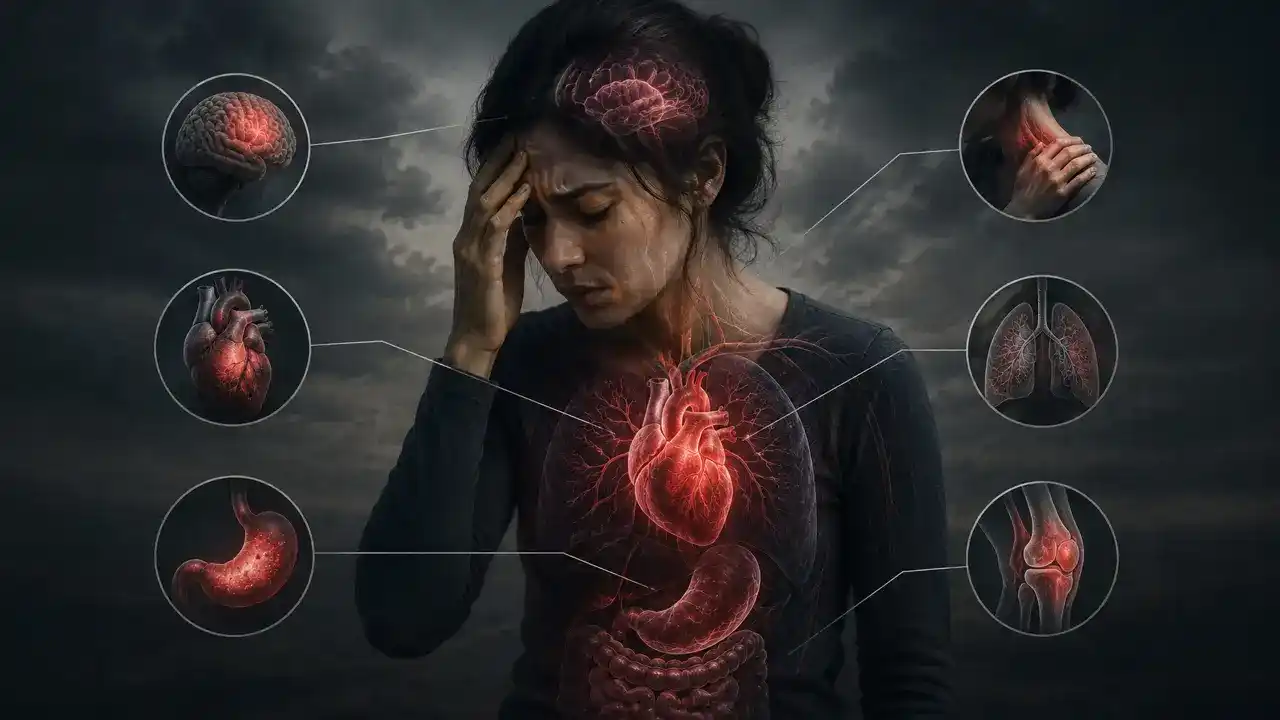
It is believed that anxiety is solely confined to the mind.
However, the reality is that it affects the whole body.
Upon feeling threatened or stressed, the body turns on its fight or flight response mechanism. This is beneficial when it is triggered by actual dangerous circumstances since it prepares one to act fast.
The issue arises when the body stays in this state of mind for weeks, months, or even years.
This prolonged anxiety makes the brain perceive everyday life situations as something dangerous. Deadlines, emails, duties towards the family, social events, and future plans are capable of triggering the fight or flight response.
Eventually, it results in:
- Persistent fatigue
- Sleep issues
- Muscle tension
- Frequent headaches
- Digestion complications
- Concentration difficulties
- Unnecessary irritability
- The sense of emotional exhaustion
People suffering from high-functioning anxiety India may have these symptoms but do not recognize them as manifestations of anxiety.
They are sure that they are just tired, working too much, or growing old.
Nevertheless, the body does not forget.
If worry becomes one’s lifestyle, the nervous system does not get the opportunity to relax.
Thus, coping with anxiety is not about being less productive. It is about protecting long-term health and well-being.
Why Telling Yourself to “Calm Down” Doesn’t Work
If managing anxiety were as simple as telling ourselves to calm down, most people would have solved the problem already.
The challenge is that anxiety is not just a thought problem.
It involves emotions, habits, beliefs, and physical responses that have often been repeated for years.
When someone is living with chronic worry, their mind may understand that everything is okay. Their body, however, may still feel tense and alert.
This is why common advice such as:
- “Just stop worrying.”
- “Think positive.”
- “Relax.”
- “Don’t stress so much.”
It often feels frustrating.
Most people already know they are worrying too much.
The issue is not a lack of awareness.
The issue is that the brain has learned a pattern.
It automatically scans for risks, problems, and things that need attention.
Breaking that pattern requires more than motivation. It requires learning new emotional skills and practicing them consistently.
That is where structured support becomes valuable.
What Structured Emotional Learning Does Differently
Many people try to manage anxiety on their own.
They read articles, watch videos, listen to podcasts, and collect advice from friends.
While these resources can be helpful, information alone does not always create change.
Real change happens when people learn how emotions work and develop practical tools to respond differently.
This is where structured emotional learning can make a meaningful difference.
Instead of focusing only on symptoms, it helps people understand:
- Why anxiety develops
- How thoughts and emotions influence each other
- What triggers chronic worry
- How emotional habits are formed
- How to build healthier coping skills
At Emotional Ability Resources (EaR), we believe emotional skills can be learned just like any other life skill.
People are not born knowing how to manage stress, regulate emotions, or navigate uncertainty.
These abilities can be developed through awareness, practice, and guidance.
When people begin learning these skills, something important happens.
They stop fighting themselves.
Instead of judging every anxious thought, they learn to respond with greater understanding and emotional balance.
This creates lasting change because the goal is not to eliminate every worry.
The goal is to develop a healthier relationship with worry.
That difference matters.
A Next Step Toward Better Emotional Well-Being

Should you see yourself in any of these trends, then rest assured that there is help.
At Emotional Ability Resources (EaR), we provide various forms of learning that will help you comprehend your emotions and mental health and learn some useful skills.
The Certificate in Mental Health Coaching learning course that we provide will be of great help to those who would like to expand their knowledge about mental health and help others.
As for individual learners, we provide the online anxiety support program India on our Learning Management System (LMS).
Your anxiety need not define your entire existence.
By acquiring the necessary skills and educating yourself, you will be able to overcome all those anxious feelings and lead a fulfilling and balanced life.
Because success should not come at the cost of peace of mind.