
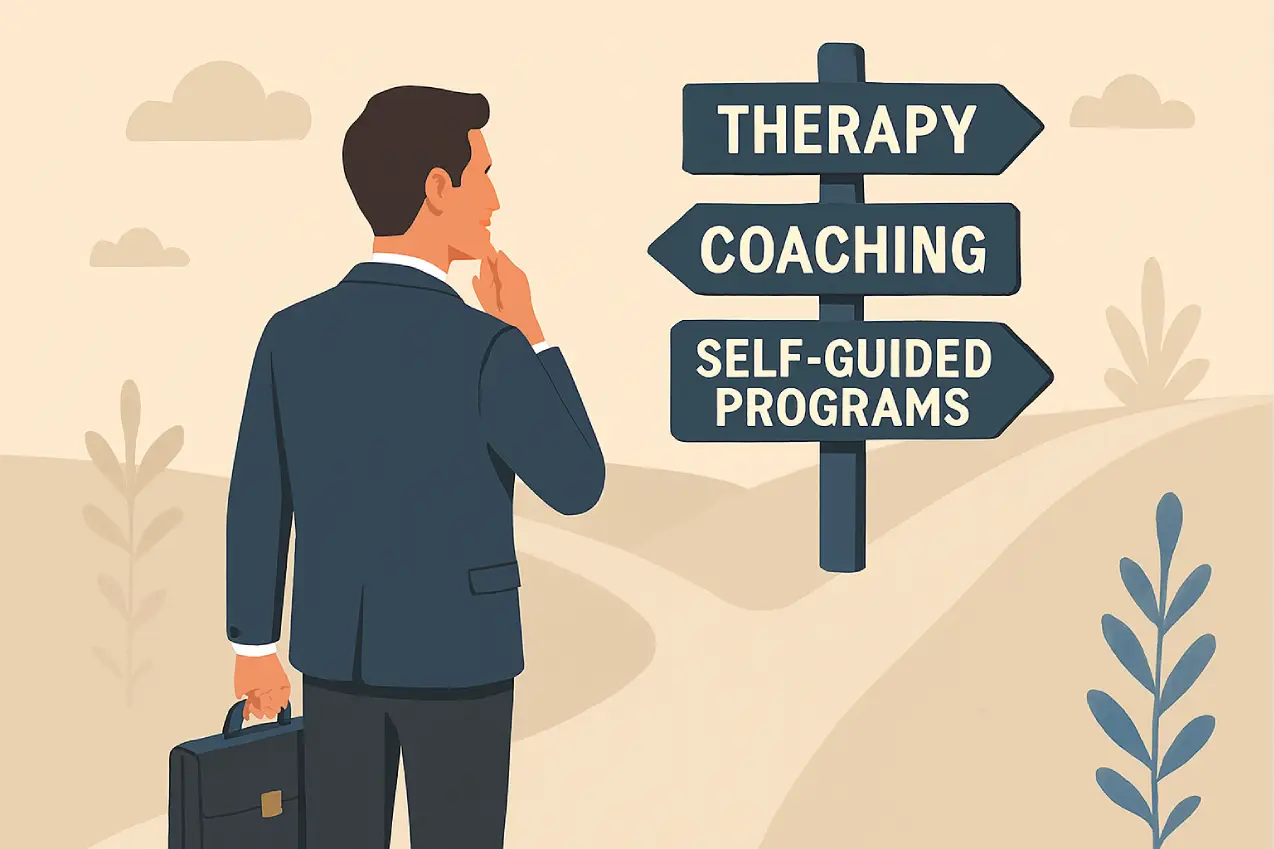
Knowing when to seek therapy or any form of emotional help can feel confusing. Many of us try to manage everything on our own. We tell ourselves that things will get better with time. Sometimes they do. But sometimes, they don’t.
Mental health support is not only for crisis moments. It is also for clarity, balance, and emotional safety. Today, we have many options—therapy, coaching, and online mental health programs. The key is understanding what kind of support fits our emotional needs right now.
This guide is a simple and honest mental health help guide to help us make that choice with confidence.
Signs Self-Help Isn’t Enough
Self-help books, videos, and journaling can be helpful. But there are times when self-help alone is not enough. Recognizing the signs you need emotional support is an important step toward healing.
Some common signs include:
- We feel emotionally tired most days
- Our sleep is disturbed or inconsistent
- Small issues feel overwhelming
- We feel stuck in the same emotional loop
- We avoid people or situations we once enjoyed
- Our emotions feel heavy or confusing
When these signs stay for weeks or months, it may be time to look beyond self-help. This is often when to seek therapy or guided support.
Seeking help does not mean we are weak. It means we are listening to ourselves.
Therapy vs Coaching vs Courses Explained
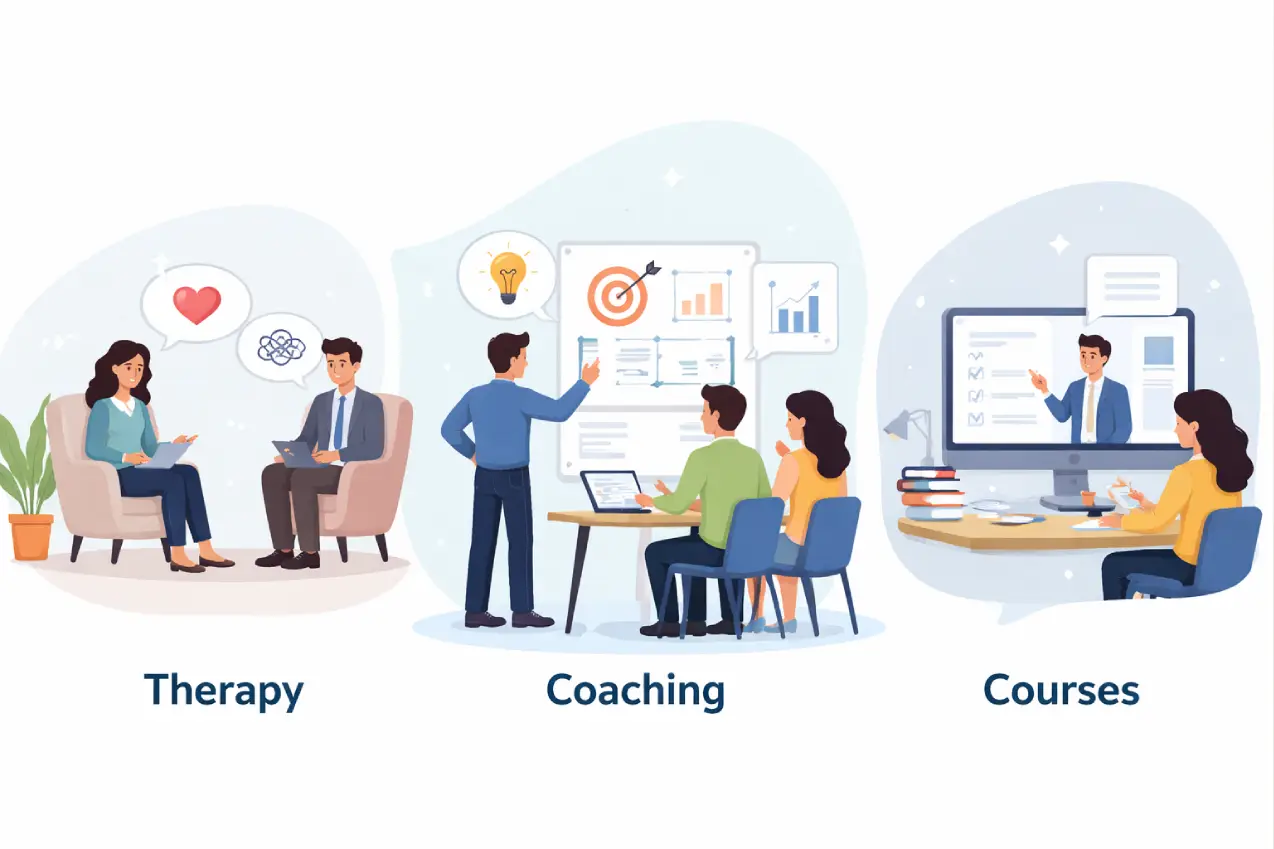
Many people struggle to understand the therapy vs coaching difference. Let’s break it down in a very simple way.
Therapy
Therapy focuses on emotional pain, past experiences, trauma, anxiety, depression, and deep stress. A therapist helps us understand our emotions and patterns safely.
Some key counseling benefits include:
- Emotional relief
- Better emotional understanding
- Safe space to talk freely
- Support during difficult life phases
Therapy is often the right choice when to seek therapy feels unclear, but emotions feel heavy.
Coaching
Coaching is more goal-focused. It helps with clarity, confidence, and personal growth. Coaching works well when we want direction, not emotional healing.
Coaching helps with:
- Decision-making
- Confidence building
- Career or life direction
- Skill development
This explains the real therapy vs coaching difference—one heals emotional pain, the other supports growth.
Self-Guided Courses
Courses and online mental health programs are structured learning tools. They help us build emotional skills at our own pace.
They are helpful when:
- We want flexible support
- We prefer private learning
- Our emotional challenges are manageable
- We want practical tools
Courses are part of modern emotional wellbeing resources and work best when we are emotionally stable but seeking growth.
How to Choose Based on Your Needs
Choosing support is not about what others are doing. It is about what we need.
Here is a simple way to think about choosing the right support:
- If emotions feel painful or overwhelming → Therapy
- If we feel stuck but not emotionally distressed → Coaching
- If we want to learn skills at our own pace → Courses
This decision-making process is a key part of any mental health help guide. We do not have to choose perfectly. We just need to choose honestly.
Many people also move between options over time. That is completely okay.
Cost, Accessibility, and Online Options
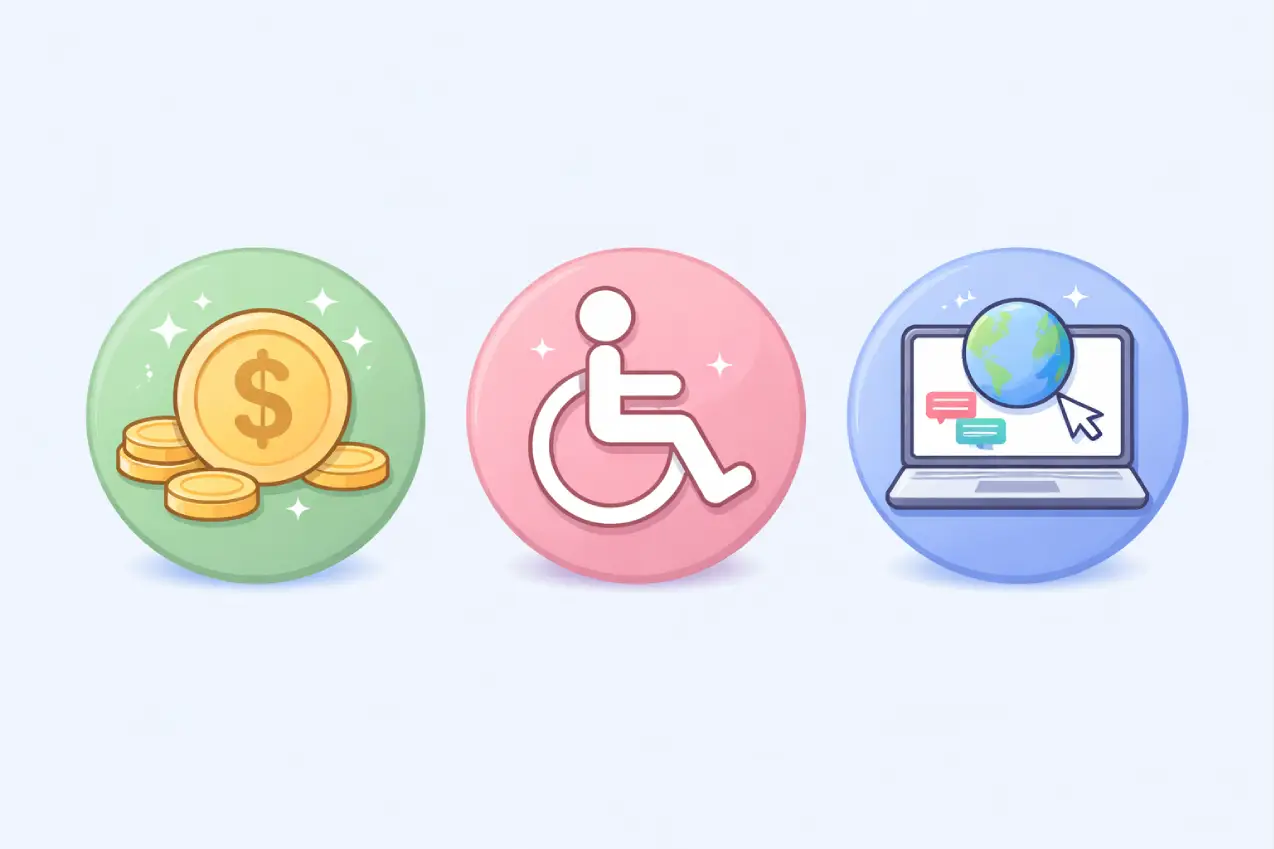
One big reason people delay help is cost or access. Thankfully, support today is more flexible than ever.
Online mental health programs have made emotional support more accessible. They allow us to learn and grow from home, at our own pace, and often at a lower cost.
Benefits of online options include:
- Flexible timing
- Private and comfortable setting
- Lower cost than traditional therapy
- Easy access to emotional wellbeing resources
According to the World Health Organization, early mental health support improves emotional strength and reduces long-term distress.
Understanding these options helps us in choosing the right support without fear or pressure.
What Progress Looks Like Emotionally
Emotional progress does not mean we are always happy. It means we are more aware, calmer, and kinder to ourselves.
Signs of emotional progress include:
- We understand our emotions better
- We respond instead of reacting
- We feel more grounded
- We set healthier boundaries
- We feel emotionally safer
Whether through therapy, coaching, or online mental health programs, progress is gentle and gradual.
This awareness is one of the biggest counseling benefits and a core goal of all emotional wellbeing resources.
Getting Started Safely
Starting emotional support can feel scary. We may fear judgment or failure. But safe support always respects our pace.
To get started:
- Be honest about how we feel
- Start with small steps
- Choose support that feels emotionally safe
- Avoid rushing the process
A good mental health help guide always reminds us that healing is not rushed. Emotional care works best when we feel supported, not pressured.
This is also the clearest sign of when to seek therapy—when emotions ask for care, not control.
Take the First Step Toward Support

At Emotional Ability Resources (EaR), we believe emotional support should feel safe, simple, and human. We offer structured programs designed to meet different emotional needs with clarity and care.
If you are unsure about when to seek therapy, confused about the therapy vs coaching difference, or exploring online mental health programs, we are here to help.
Explore our services or book a consultation today. EaR is always there to help you.
Choosing support is not a weakness. It is a powerful act of self-respect.
You don’t have to do this alone. We are here, every step of the way.