
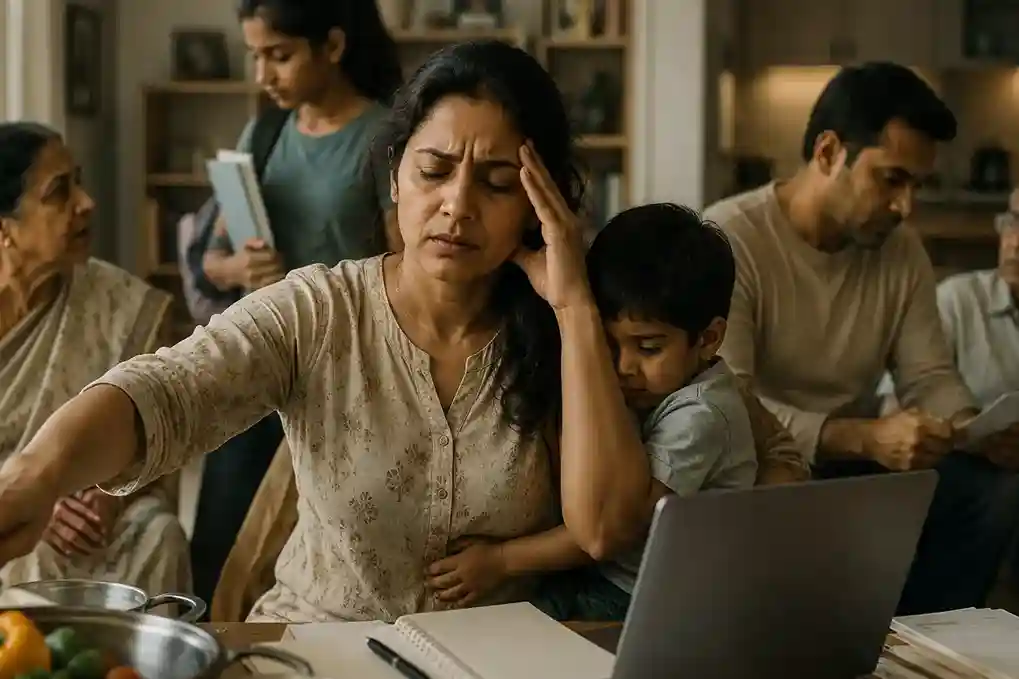
When the day is finally over, it is late already. The kitchen is cleaned, all messages have been replied to, and everybody else seems to be calm and settled. However, the brain is still working. There is always a little something that was left – a little something that was overlooked, a little something that remains, a little something that will have to be done tomorrow.
Quite often, we are so busy and pulled in so many directions at once. Work, kids, family, relationships, and everything else demand attention. We do not even relax properly when we sit down. The mind is, in fact, completing a checklist: what is going to happen after this, what is not here, what is to be done better.
And somewhere in all this, a quiet feeling starts to grow. A kind of tiredness that sleep doesn’t fix. Not just physical tiredness, but mental exhaustion. A feeling of constant overwhelm that slowly becomes normal.
This is where understanding stress management techniques becomes important—not as a luxury, but as something we truly need.
When “Just Managing” Becomes a Full-Time Job
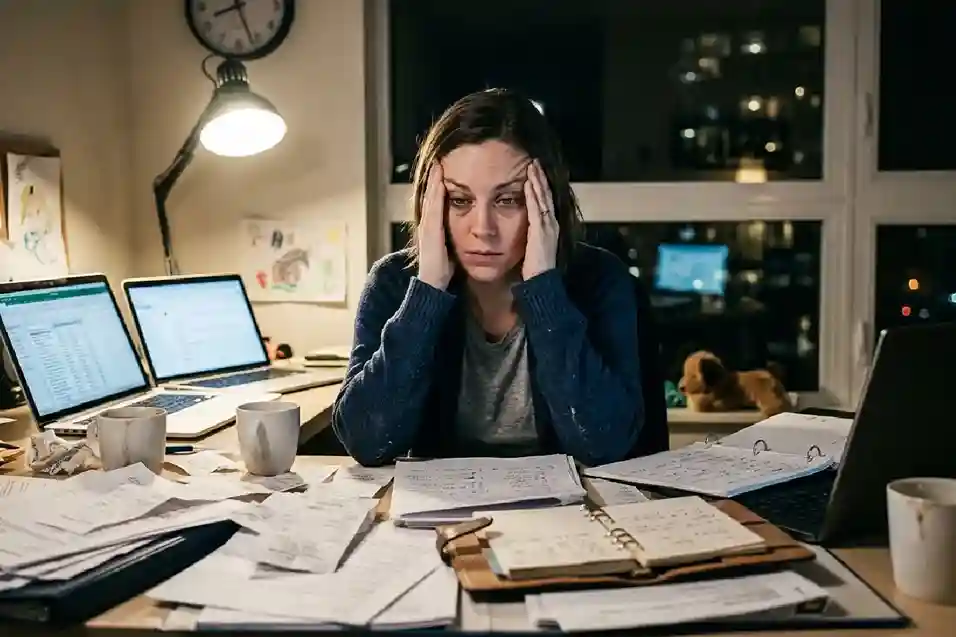
In many Indian homes, being busy is seen as a good thing. The more we handle, the more we are appreciated. We hear things like, “Everyone is managing,” or “This is life.” And slowly, we start believing that feeling stressed all the time is normal.
But it’s not that simple.
Stress is not a weakness. It is a natural response to real pressure. The problem starts when this stress never stops. When “just managing” becomes a full-time job.
This is especially true when we talk about the mental load Indian families carry. There is always something to think about—family needs, emotional responsibilities, and daily planning. And often, this load is invisible.
We rarely ask how to reduce stress in daily life, because we are too busy surviving it.
But there is a difference between normal stress and long-term stress. One pushes us forward. The other drains us slowly.
Why Indian Families Are Stress Factories (And No One Talks About It)
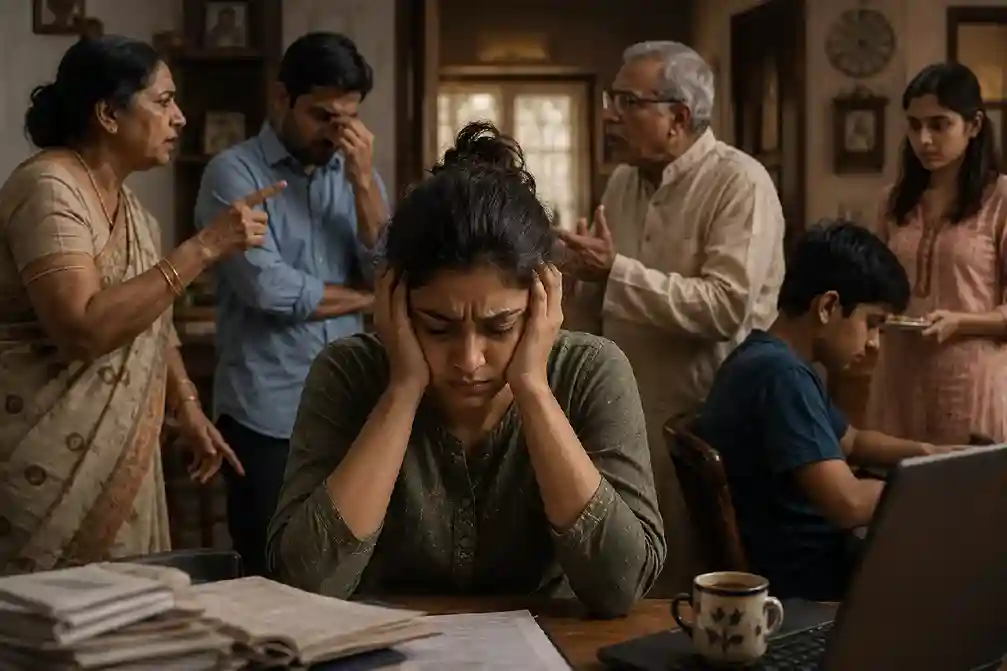
In Indian families, life is deeply connected. We don’t just live for ourselves—we live for everyone around us. And while this brings love and support, it also brings constant responsibility.
We are expected to adjust karna—to adjust, compromise, and keep things running smoothly. Saying “no” can feel uncomfortable. Taking a break can feel like guilt.
The Invisible Work No One Talks About
A big part of stress comes from the mental load Indian families carry every day. Planning meals, remembering dates, managing emotions, solving small problems—this is all part of daily life.
This invisible work often falls more on women, making work-life balance for Indian women even more difficult. Even when everything looks “fine,” the mind is always working.
The ‘Sandwich Generation’ Squeeze
Many individuals are currently handling several issues at once. The pressure is therefore coming from both directions. This involves financial pressure, emotional pressure, and physical pressure.
This results in what they call burnout symptoms in professionals, involving such conditions as exhaustion, loss of interest in activities, and poor concentration skills.
The challenge arises when one tries to be everyone—ideal parent, ideal child, ideal partner, and also an ideal professional.
What Stress Is Costing You (Beyond the Headaches)
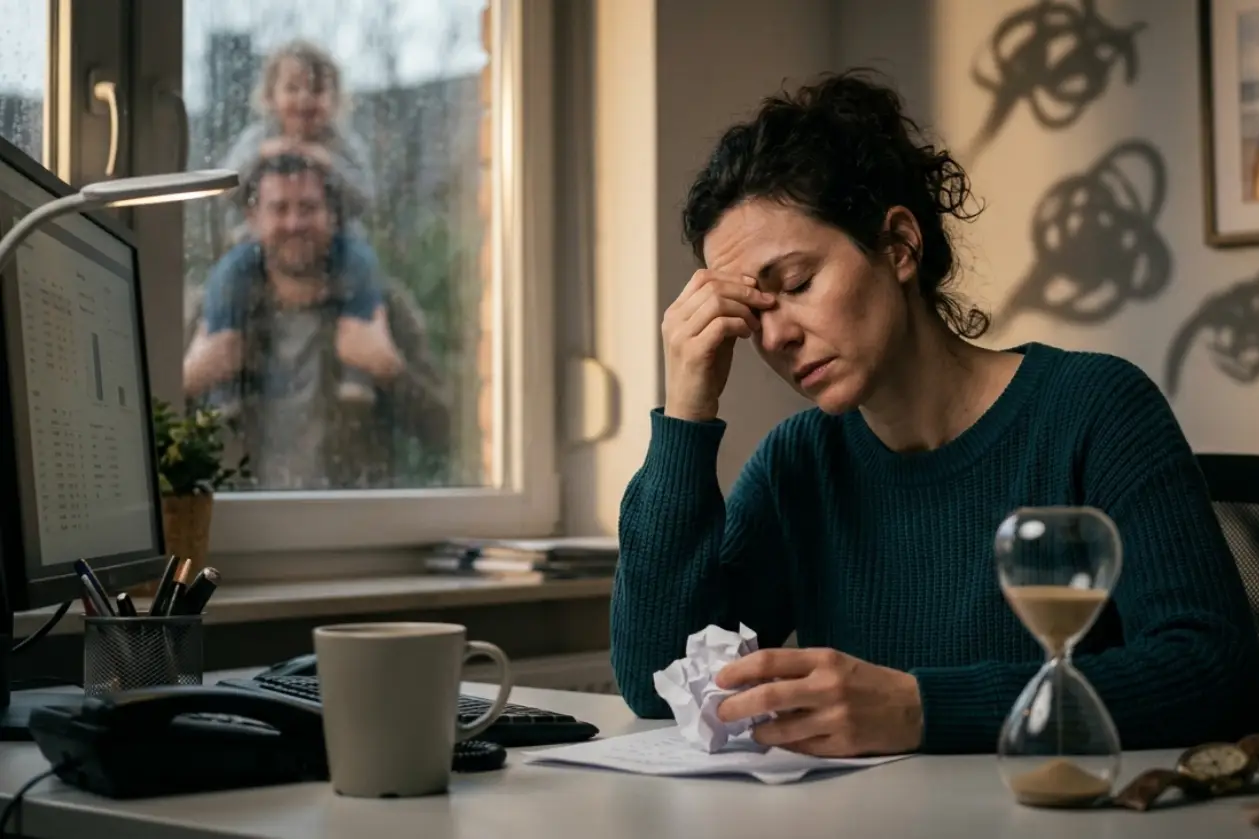
Stress doesn’t always look obvious. It builds slowly and shows up in different ways.
You may notice some signs of chronic stress, like:
- Constant tiredness, even after sleep
- Headaches or body pain
- Digestive issues
- Feeling irritated or low
- Losing interest in things you once enjoyed
- Difficulty focusing
- Snapping at loved ones and then feeling guilty
These are not random problems. They are signals.
Stress can also affect how we behave. We may start avoiding people, delaying work, or depending on unhealthy habits to feel better.
Many times, we ignore these signs and say, “This is normal.” But it’s not just busyness—it’s a sign that something needs care.
Stress Management Techniques That Actually Work in Indian Homes
Let’s be honest. Many stress tips we see online don’t fit our reality. We don’t always have quiet spaces or extra time.
So here are simple stress management techniques that can actually work in our daily lives.
In the Middle of Chaos: Micro-Breaks That Work
- The 5-Minute Reset
Take just 5 minutes for yourself. Sit quietly. No phone. No talking. Even if it’s in the bathroom or balcony. This small pause can calm your mind. - One Non-Negotiable Habit
Pick one small thing for yourself—morning tea in silence, a short walk, or listening to music. Protect this time daily.
These are simple coping strategies that help reduce mental exhaustion slowly.
Redistributing the Load: How to Ask for Help Without Guilt
- Naming the Mental Load
Write down everything you are handling. When you see it on paper, it becomes real. Share it with your family if possible. - The Power of Saying “No.”
You don’t have to say yes to everything. Start small.
You can say, “Not today, maybe tomorrow.”
This helps create boundaries without hurting relationships. - Rest Without Guilt
Rest is not laziness. It is necessary. Without rest, we cannot take care of others properly.
These steps help with stress relief at home and also answer the question many of us have—how to reduce stress in daily life.
Even small actions can make a difference. This is not about doing everything perfectly. It’s about starting somewhere.
For those searching for tension kam karne ke tarike, these small changes can be the beginning.
When Self-Help Isn’t Enough: Recognizing the Signs

Sometimes, stress becomes too much to handle alone.
You may need support if:
- Stress is affecting your health
- Relationships are getting difficult
- You feel numb or hopeless
- Daily tasks feel too heavy
- You are using unhealthy ways to cope
Seeking help is not a weakness. It is awareness.
In India, many people hesitate because of “log kya kahenge.” But mental health deserves care just like physical health.
Talking to a professional, joining support groups, or taking guided programs can help.
You don’t have to wait for a crisis.
You Deserve to Feel Lighter

We have been carrying so much for such a long time that being exhausted feels like our natural state of mind. However, this does not have to always remain the same.
Life can be stressful—but it shouldn’t be consistently filled with stress.
With small efforts, through effective stress management techniques, and with proper help, it can all improve.
You deserve your rest. You deserve some calm. You deserve those precious moments of self-care without being hard on yourself.
Taking care of yourself makes you more present. It doesn’t make you selfish but more self-aware.
Emotional Ability Resources (EaR) understands the need to regain that balance and help you do so with ease.
Because after all, there is more to life than handling everything.
It’s about feeling a sense of sukoon within ourselves.