

Emotions are part of our daily life and they keep changing all the time. We can be calm and steady one minute and the next, before we even realize it, anxiety, stress, or anger takes over us. At EaR, we are of the opinion that emotional strength does not come from controlling emotions forcibly, but from understanding them and giving them care.
This is the main reason why mindfulness for emotional regulation is very useful. Mindfulness enables us to pause, acknowledge our feelings, and choose to respond rather than react. It helps us keep in touch with the here and now, even when our emotions are overwhelming.
We do not necessarily require complicated devices or extensive practice time. By plotting a few simple reccurring steps of mindfulness, one can gradually change the way to handle emotions, stress, and anxiety.
How Mindfulness Changes Emotional Reactivity
Most of us just react without thinking. We get hurt by a small remark. We become afraid when we get an email related to work. We get angry when a family matter comes up. Such reactions are very quick because our brain perceives the situation as dangerous.
Mindfulness for emotional regulation gives us the opportunity to insert a gap between experiencing a feeling and giving a response. As we continue practicing mindfulness, we become more aware of our emotions at the earliest stage. We can sense the tight chest, the rapid breathing, or the racing thoughts coming before they take control.
This delay gives us a choice.
We can take a breath instead of shouting.
We can calm ourselves instead of panicking.
We can communicate calmly instead of shutting down.
Eventually, mindfulness creates emotional space. This space enables us to reduce anxiety with mindfulness and practice healthy emotional control techniques that come to us naturally and are not forced.
Science Behind Breathing and Nervous System Calm
Our body and mind are interlinked. We find that whenever we feel some stress or anxiety, our heart beats quickly, and our nervous systems are alerted, preparing to fight danger.
Simple breathing techniques for anxiety can actually send a signal to the brain that all is well. Slow breathing tells the nervous system that we are safe.
This process supports nervous system calming and helps the body return to balance.
Studies have shown that mindfulness in breathing eases stress hormones as well as emotional balance. According to the American Psychological Association, mindfulness aids in emotional regulation and stress reduction.
This is the reason that breathing is incorporated as an essential element in meditation for emotions and healing.
10-Minute Daily Regulation Routine
We may think we need a lot of time to train in mindfulness. This is not true; just 10 minutes a day can be effective.
A simple daily routine, which we can all follow, is as follows:
Minute 1-3: Gentle Breathing
Sit comfortably. Inhale for 4 seconds through the nose. Exhale slowly for 6 seconds. This helps to follow the appropriate breathing technique for anxiety and starts the nervous system calming.
Minute 4-6: Body Awareness
Notice your body. Notice your feet on the floor. Feel your shoulders relax. This is present moment awareness.
Minute 7–9: Emotion Check-In
Ask yourself softly: “What am I feeling right now?” No judgment. Just awareness. This strengthens mindfulness for emotional regulation.
Minute 10: Intention Setting
Establish a peaceful intention for the day, e.g., respond slowly, listen deeply.
This little exercise can help reduce anxiety with mindfulness through mindfulness and create emotional equilibrium.
Quick Grounding Techniques for Crisis Moments
Emotions, sometimes, may be so overwhelming. Anxiety may hit peaks. The mind can become completely out of control. Grounding exercises can then be very helpful in times of stress.
Grounding Steps that Anyone Can Undertake:
5–4–3–2–1 Method
Name 5 things that you see.
4 things you feel
3 things you hear
2 Things You Smell
1 thing you taste
This view causes the mind to resume its position in the here and now.
Cold Water Reset
Rub your face with cold water, or use a cold object. This helps calm your nervous system in times of high stress.
Hand on Heart Breathing
Place one hand on your chest. Breathe slowly. This is a good meditation to try in emotional overload situations. These tools provide us with stability in an overwhelming emotional storm.
Using Mindfulness in Relationships & Work
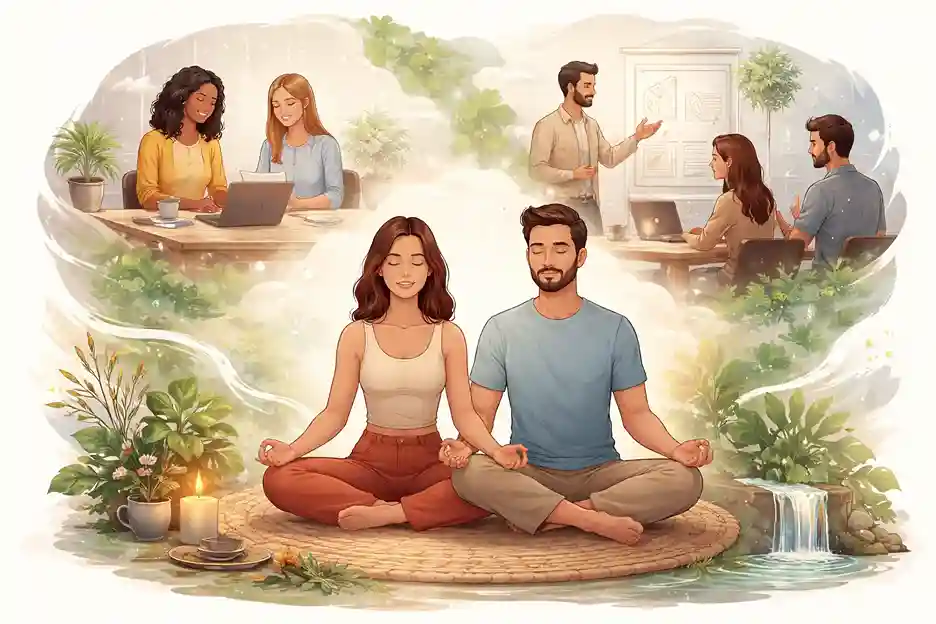
In any kind of relationship or workplace, emotions commonly surface. Misunderstandings, pressures, and needs can cause people to overreact.
So, when you add mindfulness for emotional regulation, you learn to pause before speaking, you learn to listen more effectively, you become more aware of the tone of your voice, and you become more effective at clarifying your responses rather than defending yourself.
At the workplace, mindfulness enables us to cope with pressure situations in a calm manner. It can aid good emotional control techniques during meetings, deadline situations, and feedback.
In relationships, mindfulness creates emotional safety. It means that conflicts will become conversations, not fights, when we slow down and become more mindful.
This is how we truly reduce anxiety with mindfulness in our daily life and not only during our meditation session.
Programs and Guided Courses
However, learning to be mindful on your own can sometimes be quite confusing. Guidance can make the learning experience much easier and more comfortable.
At Emotional Ability Resources, the programs we offer are geared towards simple practices, emotions, and application. We ensure a combination of meditation for emotions, grounding, and reflection.
Our guided sessions are designed to help you become familiar with how you feel, relax the nervous system, and become emotionally strong gradually.
Mindfulness Course
If we wish to reduce feelings of anxiety, react less to situations, and gain greater mastery of our emotions, mindfulness is a gentle yet powerful practice.
Our mindfulness course at EaR is geared towards supporting emotional well-being, addressing anxiety, and developing daily regulation skills, using mindfulness for emotional regulation.
Begin your journey toward calmness, clarity, and emotional safety through mindful breathing.