

Relationships are meant to feel safe, respectful, and supportive. Yet many of us feel tired, confused, or emotionally drained in our relationships. One major reason behind this is the lack of healthy boundaries in relationships.
At EaR, we often hear people say, “I say yes even when I want to say no,” or “I feel guilty the moment I set limits.”
This blog is written to help you understand boundaries in a simple way and learn how to say no without guilt, without fear, and without hurting relationships.
Why Boundaries Protect Mental Health
Boundaries are not walls. They are clear lines that protect our emotional and mental space. When we have healthy boundaries in relationships, we feel respected, calm, and emotionally safe.
Boundaries help us:
- Protect our energy
- Feel emotionally secure
- Build trust and balance
- Maintain emotional safety
Without boundaries, we begin to lose ourselves over time. We start to do everything to satisfy others and lose sight of our own needs. We may become stressed, angry, and burnt out.
According to the American Psychological Association, setting personal boundaries is good for mental health, since it eliminates emotional stress by helping one manage their personal relations well.
This is why boundaries are not selfish. They are necessary for mental peace and relationship self respect.
Signs Your Boundaries Are Too Weak or Too Rigid
Not all boundary problems look the same. Some of us struggle with weak boundaries, while others build very rigid ones.
Signs of Weak Boundaries
- Saying yes when we want to say no
- Feeling responsible for everyone’s emotions
- Fear of conflict
- Constant guilt
- Struggling with people pleasing recovery
Signs of Rigid Boundaries
- Avoiding emotional closeness
- Shutting people out
- Difficulty trusting others
- Feeling lonely even in relationships
Healthy boundaries sit in the middle. They allow closeness without losing ourselves. They help us feel safe without building emotional distance.
Step-by-Step Boundary Setting Framework
Learning boundary setting skills takes time and practice. We don’t need to be perfect. We just need to start.
Step 1: Notice Discomfort
Our feelings are signals. When something feels uncomfortable, heavy, or draining, it is often a boundary issue.
Step 2: Name the Need
Ask yourself:
What do we need right now?
Rest? Space? Respect? Time?
Step 3: Be Clear and Simple
Boundaries do not need long explanations. Clear words work best.
This is where assertive communication becomes important. Assertive communication means being honest, calm, and respectful—without being rude or silent.
Step 4: Stay Consistent
People may test our boundaries. Consistency helps others understand that we are serious about our limits.
Step 5: Accept Discomfort
Setting boundaries may feel uncomfortable at first. That discomfort does not mean we are wrong.
Scripts for Saying No Kindly
Many of us struggle with how to say no without guilt. Below are simple and kind examples that protect our emotional space.
These are also practical emotional boundaries examples:
- I understand, but I’m not comfortable with that.
- I won’t be able to do this right now.
- I need some time for myself today.
- That doesn’t work for me.
- I care about you, but I need to say no.
Saying no does not mean we don’t care. It means we care about ourselves too.
Managing Guilt and Fear After Setting Boundaries
Guilt is one of the biggest reasons people avoid boundaries. We may fear rejection, conflict, or being misunderstood.
Here are a few gentle reminders:
- Guilt does not mean we are wrong
- Other people’s reactions are not our responsibility
- Discomfort is part of growth
- Boundaries build emotional safety, not distance

When guilt shows up, we can pause and remind ourselves:
“We are allowed to protect our emotional health.”
With time, guilt becomes lighter, and confidence grows. This is an important step in people’s pleasing recovery.
Professional Support for Boundary Work
Sometimes, boundaries feel hard because of past experiences, childhood patterns, or emotional wounds. In such cases, professional support can make a big difference.
At EaR, we work with individuals and couples to:
- Build boundary setting skills
- Improve assertive communication
- Strengthen relationship self respect
- Create emotionally safe relationships
Professional guidance helps us understand why boundaries feel difficult and how to practice them in real life without fear.
How Childhood Experiences Shape Our Boundaries
Some of us struggle with setting healthy boundaries in our relationships not in spite of the fact that we understand the concept of boundaries, but we never learned boundaries early in life. Growing up, we learn boundaries based on how we see adults handle their emotions and respect boundaries.
If our needs were ignored or dismissed, we may grow up believing that saying no is wrong. This often leads to people-pleasing behavior and difficulty with relationship self respect. On the other hand, if emotions were unsafe or unpredictable, some of us may build very strong emotional walls to protect ourselves.
Understanding this connection helps us practice people pleasing recovery with more kindness toward ourselves. We are not weak. We are learning skills that were missing earlier.
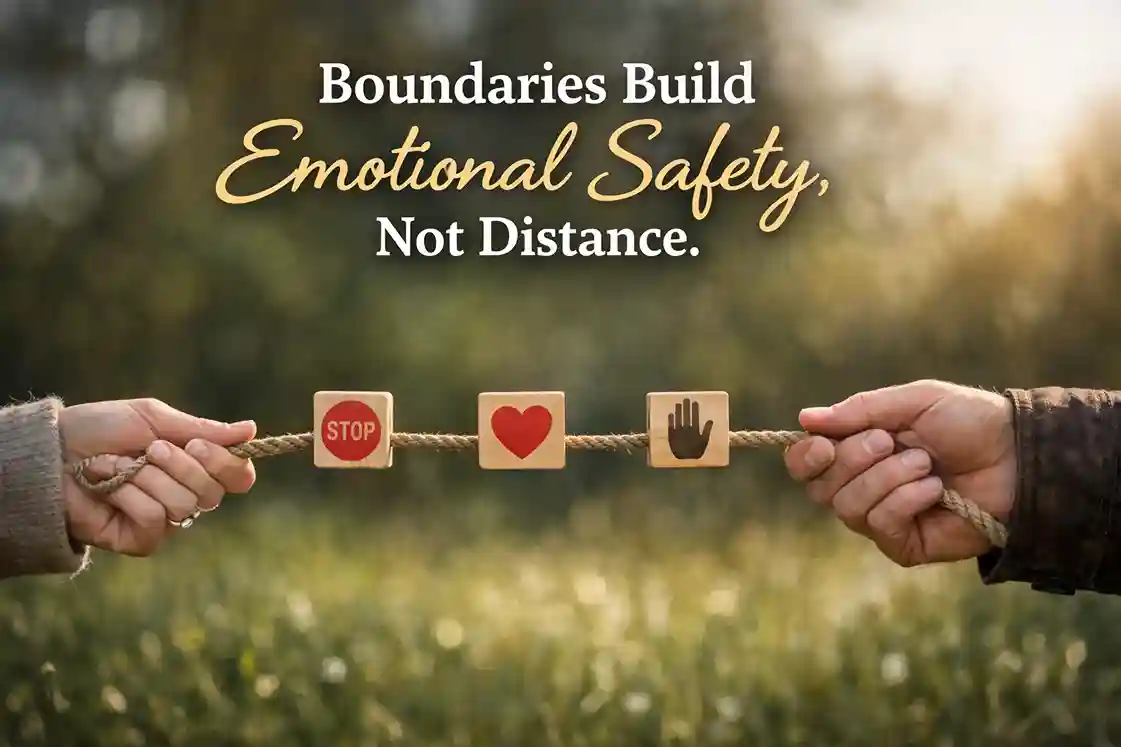
Boundaries Build Emotional Safety, Not Distance
A common fear we hear is, “If I set boundaries, I will lose people.” In reality, boundaries help build emotional safety in relationships.
When we clearly express limits:
- Trust increases
- Misunderstandings reduce
- Emotional clarity improves
- Relationships feel more balanced
Healthy people respect boundaries. If someone reacts with anger, guilt, or pressure, it often shows their discomfort with limits—not our mistake.
This is where assertive communication becomes powerful. We can speak our truth calmly while still respecting others.
Daily Practices to Strengthen Boundary Setting Skills
Boundaries are not one-time decisions. They are daily practices. Here are some small steps we can take:
- Pause before agreeing to requests
- Check in with our emotions
- Practice saying no in low-risk situations
- Notice guilt without acting on it
- Celebrate small boundary wins
These small actions slowly improve boundary setting skills and help us feel more confident over time.
Start Your Boundary Healing Journey
Healthy boundaries are a form of self-care. They allow relationships to grow with honesty and respect.
If you are ready to build healthy boundaries in relationships and learn how to say no without guilt, we invite you to explore our:
- Boundary-setting workbook
- One-on-one coaching sessions
- Emotional wellness programs
At EaR, we believe that when we protect our emotional space, we create relationships rooted in safety, respect, and balance.
You deserve relationships where your needs matter too.