

Relationships are often in the spotlight during the month of February. When you see everyone around you talking about love, connection, and togetherness, you can’t help but make a pause. It is an occasion where you can take a look at how you connect, how you talk, and how you listen to the closest people in your life.
At Emotional Ability Resources (EaR), it is our belief that relationships are based on love and time invested in each other, but they are also strengthened through an awareness of all this, conflict resolutions, and honesty in communication. This is where emotional intelligence in relationships becomes significant.
Understanding our own feelings and the feelings of others, and respecting those feelings, makes relationships feel more secure, deeper, and evenhanded. This blog will attempt to simplify the concept of emotional intelligence, as well as its potential impact on romantic and family relationships.
What Emotional Intelligence Means in Romantic & Family Relationships
Emotional intelligence in relationships is an awareness of our feelings, reasons for our feelings, and the effects our feelings have on our partner or family member. It is also an awareness of our partner’s or family member’s feelings and responding to the feelings rather than reacting to them.
In close associations, emotions come every day – joy, pressure, anger, fear, affection, and frustration. Emotional intelligence guides us in managing these emotions without harming ourselves and other people.
It also includes:
- Understanding our emotional triggers
- Showing Empathy in Relationships
- Managing emotions during tough moments
- Clear and calm communication of feelings
Thus, in a relationship or family, emotional intelligence is not about being perfect; rather, it is about being aware, open, and growing together.
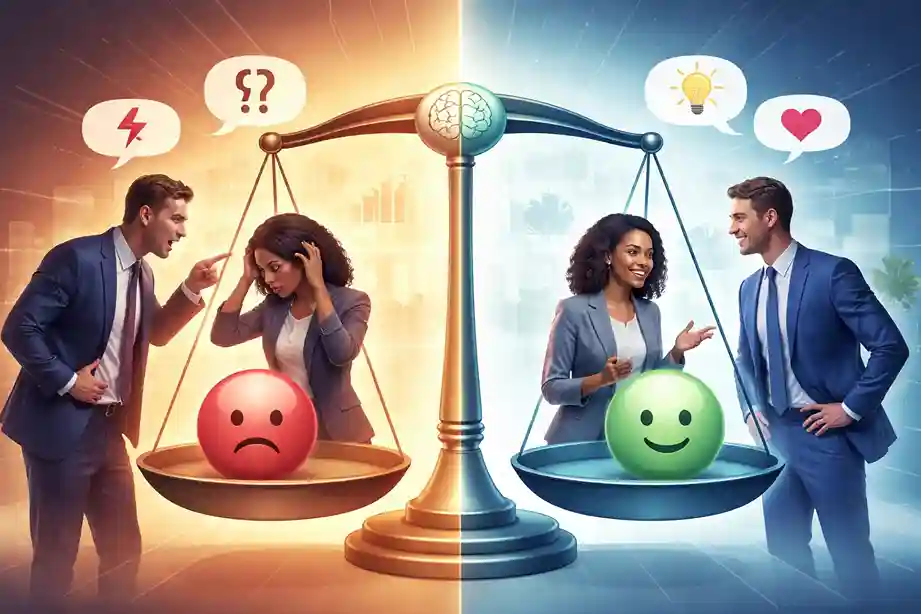
Signs of Low vs High Emotional Intelligence in Communication
Communication often shows how emotionally intelligent a relationship is.
Signs of Low Emotional Intelligence
- Frequent misunderstandings
- Shouting, blaming, or shutting down
- Avoiding difficult conversations
- Feeling unheard or dismissed
- Holding grudges instead of resolving issues
When emotional intelligence is low, partners may speak often but still feel disconnected.
Signs of High Emotional Intelligence
- Calm and respectful conversations
- Honest sharing of feelings
- Using active listening techniques
- Willingness to repair after conflict
- Emotional safety and trust
High emotional intelligence helps improve communication in relationships and creates space where both people feel valued.
5 Practical EI Skills That Strengthen Relationships
Here are five simple yet powerful relationship emotional skills that help build strong bonds.
1. Emotional Awareness
Emotional awareness in couples is essentially the ability to recognize feelings and thus prevent them from developing into reactions. For example, if we are able to express, “I feel hurt” rather than showing anger, the communication between us becomes more crisp and clear.
2. Active Listening
Active listening entails listening with the intent to understand rather than listening to come up with a reply. It is about maintaining eye contact, refraining from interruptions, and giving back in words what one has heard. Being understood creates a bond.
3.Empathy
Empathy in love lets one put oneself in the partner’s shoes. It also helps to keep the couple emotionally close, even when there is a difference of opinion.
4. Emotional Regulation
Emotional regulation within romantic relationships is the ability to stay composed when emotions run high. It is the capacity to take a break, inhale deeply, and give a considered response instead of reacting in an emotionally charged way.
5. Conflict Resolution
Healthy conflict resolution skills aim at throwing light on the issue under the spotlight rather than attacking the individual. Properly handled disagreements turn out to be relationship-strengthening.
Common Relationship Conflicts and Emotion-Focused Solutions
Conflicts are normal in every relationship. Emotional intelligence helps us manage them better.
Conflict: Miscommunication
Solution: Try to speak slowly and engage in active listening. Repeat what you have heard before responding.
Conflict: Trust Issues
Solution: Relevant trust building exercises, such as the promotion of honest practices and the consistency of action, can assist.
Conflict: Emotional Distance
Solution: Raise the level of emotional awareness in couples through regular sharing of feelings, however trivial they may seem.
Conflict: Anger and Arguments
Solution: Learn to regulate emotional regulation in love during intense moments by stepping aside briefly and resuming interaction once calm.
When emotions are treated with care, conflicts become opportunities for growing closer instead of growing apart.
Exercises to Practice Emotional Connection Daily
Developing emotional intelligence does not call for dramatic changes. Rather, daily practices can add up to have a significant impact.
- Daily Emotional Check-In
Take five minutes to ask one another, “How are you really feeling today?” This develops emotional awareness in couples.
- Listening Without Fixing
Practice listening without giving advice. This improves techniques for active listening and emotional safety.
- Gratitude Sharing
Share one thing you enjoy about each other every day. These simple trust building exercises enhance your relationship.
- Pause Before Reacting
Breathe before you respond in emotionally charged situations. This is a good emotional regulation in love.
- Reflect After Conflict
Discuss differences because, after disagreements, it is necessary to talk about what was felt or learned.

When to Seek Therapy or Coaching for Relationship Growth
At times, emotional issues may be overwhelming and difficult to navigate on one’s own. Asking for help is not a weakness; it is a strength because it demonstrates a willingness to improve and become better.
You may consider therapy or coaching when:
- Conflicts repeat without resolution
- Communication feels blocked
- Trust has been damaged
- Emotional distance keeps growing
- Stress impacts emotional connection
At Emotional Ability Resources (EaR), we help individuals and couples develop emotional intelligence in relationships through therapy, coaching, and guided learning.
Stronger relationships depend on emotional skills
People can relate well to one another when their feelings are understood, acknowledged, and handled with care. Enhancing relationship emotional skills, thus, we make levers of trust, empathy, and effective communication through communicative and constructive mutual conversations.
For those who want to change their communication style in relationships, add empathy in relationships, and create a lasting emotional connection, check out our emotional intelligence courses and therapy resources at Emotional Ability Resources (EaR).
One emotion at a time, together, we can create safe, supportive, and deeply connected relationships that feel great.