
Caring for a loved one is one of the most meaningful roles any of us can have. But it is also one of the most exhausting things as well. Many times, caregivers wake up in the morning already exhausted. We keep going because someone relies on us. Often, with time, this will lead into deep tiredness, quiet guilt, and feeling alone, when actually people are present around us.
At EaR, we see this silent struggle every day. Therefore, therapy for caregiver burnout and emotional support for caregivers are not indulgences. They are necessities. Getting help does not mean we are weak or selfish. It means we want to care better—both for others and for ourselves.

Recognizing the Signs: Are You Suffering from Caregiver Burnout?
Burnout does not happen overnight; it is a gradual process. Many of us disregard the signs and symptoms because we think that feeling tired is “normal.” But when the tiredness is constant, it is time to stop and check in with ourselves.
Here are some common signs of caregiver burnout:
Emotional signals
- It includes feelings of sadness, numbness, and emptiness most days.
- Irritability or becoming angry easily
- Feeling guilty when we take a break
- Feeling hopeless or stuck
Physical signs
- Constant tiredness even after rest
- Headaches, pain in the body, or stomach problems
- Trouble sleeping or sleeping too much
Behavioral signs
- Pulling away from friends or family
- Loss of interest in things we once enjoyed
- Dwell more on the small problems
- Feeling as though we are “on duty” at every moment
If many of those feel familiar, we aren’t failing-we’re exhausted. This is where therapies for caregiver burnout and steady emotional support for caregivers can truly help.

Why Traditional Talk Therapy May Not Suffice
Talking helps; being heard matters. Still, caregiving brings an emotional weight of its own that general therapy may not always reach.
Caregivers often may be caught between feelings of:
- If I rest, I am being selfish
- No one else can do this properly
- I should be able to handle this
All these thoughts are closely related to responsibility and love. They require a different kind of support-one that understands caregiver guilt, long-term stress, and constant pressure.
That is why many caregivers benefit from therapy that also includes Stress relief coaching and Mental resilience training. This kind of support does not just talk about feelings. It helps us manage daily stress, set limits, and build strength over time.

What Effective Support for Caregivers Looks Like
Good caregiver support is not a ‘one size fits all’ solution; it works best when emotional care and practical tools come together.
Here is what effective support can often include:
- Emotional intelligence
A safe space to talk openly about feelings of anger, sadness, fear, and guilt, free from judgment. This is the heart of Emotional support for caregivers.
- Stress relief coaching
Simple tools to cope with everyday stress: breathing techniques, quick grounding techniques, and how to soothe the body in those moments of high stress. Stress relief coaching helps us feel more in control in the moment.
- Mental toughness training
Caregiving is often a long journey of ups and downs. The mental resilience training helps us build emotional strength so setbacks merely feel manageable instead of crushing.
- Learn to set limits
Many caregivers have difficulty saying no. Setting boundaries is not about caring less-it is about caring longer. We highly recommend reading our guide, which explains how small limits can protect our energy and health.
Combined, these elements form authentic, enduring support.

Modalities of support range from online counseling to coaching
Different caregivers need different kinds of help, and that is okay.
Online therapy and counseling
Online counseling can help the caregiver to process such sad feelings, constant concern, or heavy emotional weight. Online counseling provides a confidential place in which to share feelings about loss, fear, and emotional hurt.
Coaching-based support
Coaching is more action-oriented. It helps with:
- Day-to-day routines
- Time management
- Coping with stress in real life
- Making small, achievable changes
Many caregivers find their strength in combining therapy with coaching. Together, they support both the heart and daily life. This mix also connects well with Emotional wellness resources that caregivers can use between sessions.

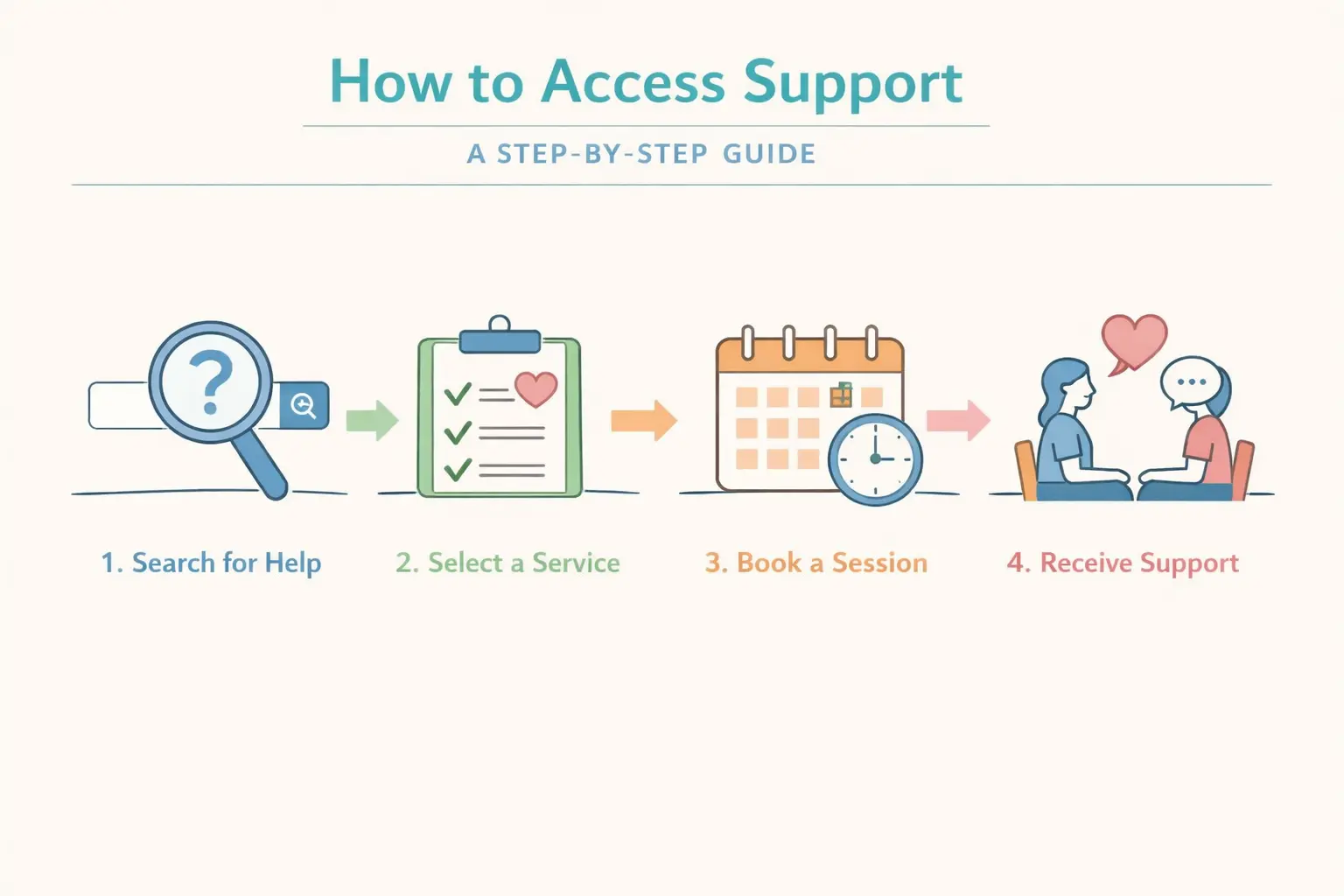
How to Access Support: A Step-by-Step Guide
When we’re tired, finding help can feel overwhelming. It’s easier if we break it into steps.
Step 1: Realizing that help is needed
Needing help is not a sign of our failure; it is a sign of our humanity.
Step 2: What do we want most?
Are we feeling emotionally low? Overworked? Anxious? Clear needs help us to choose between therapy, coaching, or both.
Step 3: Seek caregiver-directed assistance
Look for professionals and programs that actually use terms like burnout and stress as related to caregiving. This helps to ensure that they are aware of your reality.
Step 4: Opt for flexible options
Many caregivers benefit from online mental health programs. These fit into busy schedules and reduce travel stress while offering strong Emotional wellness resources.
Step 5: Start small, stay consistent
Even one session can bring relief. Consistency builds change.
Conclusion
Taking Care of yourself is a Sign of Strength. Caregivers give so much: time, energy, love, and patience. But we cannot pour from an empty cup. Seeking Therapy for caregiver burnout is not giving up. It is choosing to continue with strength. With proper Emotional support for caregivers, gentle Stress relief coaching, and steady Mental resilience training, we are able to care in a healthy and long-lasting manner. We deserve support just as much as those we care for.

Frequently Asked Questions
Q1. How does caregiver burnout therapy differ from coaching?
Therapy looks more at emotional healing and deep feelings. Coaching looks at daily actions, how to handle stress, and practical change. Many caregivers have benefited from using them together.
Q2. How can we find a therapist who specializes in caregiver issues?
Look for therapists or programs that clearly mention caregiver burnout, long-term stress, or family care. This shows they understand caregiver-specific challenges.
Q3. Are there options available online for support that would meet a busy caregiver’s schedule?
Yes, many online mental health programs offer flexible timing and strong Emotional wellness resources, making support even more accessible around an often busy routine.