

It usually starts with something small. A question asked one too many times. A message that comes at the wrong moment. The pressure cooker is whistling, the phone is ringing, and there is already too much on our plate.
And then suddenly, something slips.
Words come out sharper than we intended. A plate falls. A door shuts louder than needed. For a few seconds, everything feels intense. And then comes silence.
We stood there thinking, “Why did we react like that?”
This is not the first time. Maybe not even the tenth.
That quiet guilt that follows—that is what hurts the most.
Many of us start searching for anger management techniques at this point, not because we are “bad,” but because we are tired of repeating the same pattern.
When “Losing Your Temper” Starts Feeling Like a Personality Flaw

In many Indian homes, anger is not something we are taught to understand. It is something we are told to hide.
We hear things like, “Itna gussa kyun?” or “Calm down.” Over time, we start believing that anger is wrong.
But the truth is simple—anger is a normal human emotion.
The real issue is not anger. It is how we express it.
Many of us get stuck in a cycle:
- We lose our temper
- We feel guilty
- We try to control it harder
- And then we lose it again
This cycle is common in family life.
When we don’t learn how to control anger in a relationship, it starts affecting how we see ourselves. We begin to feel like something is wrong with us.
But nothing is “wrong.” We just haven’t been taught better emotional regulation skills.
Why Indian Families Are a Pressure Cooker for Unspoken Anger
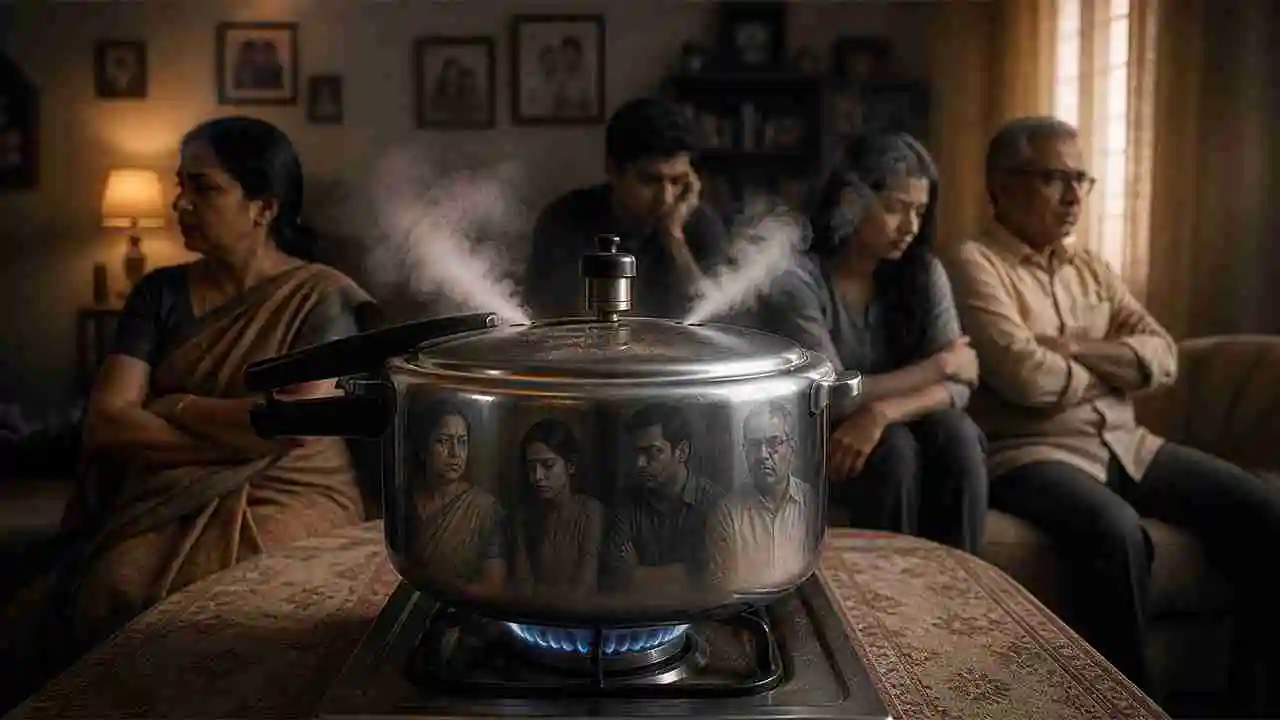
Think about a pressure cooker. Everything is inside. Heat builds. There is no space to release it slowly.
That is how emotions work in many Indian families.
We live close. We share spaces. We adjust constantly. But we rarely talk openly about how we feel.
The “Adjust Karna” Trap
We are often told to adjust. To stay quiet. To keep peace.
But when we keep adjusting without expressing ourselves, emotions don’t disappear. They turn into repressed emotions.
Over time, these come out as:
- Irritability
- Sudden emotional outbursts
- Small things becoming big triggers
This is a major cause of anger and family conflict.
When Anger Is Really Something Else
Anger is often not the main emotion. It is what shows up on the surface.
Underneath, there may be:
- Hurt
- Feeling ignored
- Exhaustion
- Stress
This is especially true in stress management for Indian women, where responsibilities keep building without enough support.
Understanding this is the first step toward real anger management techniques.
What Anger Is Costing You (Beyond the Arguments)

Anger does not stay limited to one moment.
It slowly shows up in other ways.
You may notice:
- Constant irritability
- Headaches or body tension
- Feeling tired even without doing much
- Avoiding conversations
- Guilt after every reaction
In relationships, it can look like:
- Silence that lasts for days
- Walking on eggshells
- Small comments that carry hidden frustration
Over time, anger issues in marriage can create distance between partners.
In families, it affects family harmony. Children may start learning the same patterns. They may think anger is the only way to express feelings.
Recognising these signs is not about blaming ourselves. It is about understanding where change is needed.
Anger Management Techniques That Actually Work in Real Indian Homes
We are not trying to remove anger completely. That is not possible.
We are learning how to handle it better.
Here are simple and practical anger management techniques that work in everyday life.
In the Moment: What to Do When You Feel It Rising

- The Pause Technique
When you feel anger building, step away.
Go to another room, balcony, or any other place.
Say: “Let’s talk in 10 minutes.” - Name It to Tame It
Say what you feel:
“I am feeling angry” or “I am actually hurt.”
This builds emotional regulation skills. - Use Simple Calm Down Techniques
Take slow breaths. Drink water. Sit quietly.
These small calm down techniques help reduce intensity.
Between Moments: Building Your Anger Toolkit
- Identify Your Triggers
Notice what sets you off:
- Lack of sleep
- Feeling ignored
- Too much stress
Understanding triggers reduces sudden reactions.
- Release Emotions Safely
Write in a diary. Go for a walk. Talk to someone you trust.
This prevents repressed emotions from building. - Repair the Moment
After an outburst, come back and say:
“I’m sorry for how I spoke. What I meant was…”
This builds trust again.
For many people searching “gussa control kaise kare”, these small steps make a real difference.
Is It Time to Ask for Help?
Sometimes, managing anger alone feels difficult.
You may need support if:
- Anger is damaging your relationships
- You feel out of control
- You often regret your reactions
- There is emotional or physical harm
Seeking help is not a weakness.
In fact, it is one of the strongest steps you can take.
Support can include:
- Individual counselling
- Couple therapy
- Guided anger management techniques programs
In India, many people hesitate because of “log kya kahenge.”
But emotional health deserves the same care as physical health.
If safety is ever at risk, professional help becomes even more important and EaR is there to help you.
You’re Not Your Anger
The anger you feel does not define you.
It is just a signal. A sign that something needs attention.
What matters is what we do next.
When we learn better anger management techniques, we:
- Build stronger relationships
- Improve family harmony
- Create a calmer environment for ourselves and our loved ones
At Emotional Ability Resources (EaR), we support individuals, couples, and families in building these skills in a safe and understanding way.
Because change is possible.
And a peaceful home is always worth the effort.